
The saw chain and guide bar are among the most important wear parts in a firewood processor. Their service life depends heavily on a few basic factors: sharpness, correct chain tension, sufficient lubrication, clean raw material and regular guide bar maintenance. Keeping the cutting system in good condition does more than save chains and guide bars. It also maintains cutting speed, reduces unnecessary heat and helps prevent wear from spreading to other components.
A dull chain cuts more slowly and creates more friction and heat. This increases wear on both the chain and guide bar and puts additional strain on the sprocket and other cutting components.
Typical signs of a dull chain include:
It is better to sharpen or replace the chain as soon as cutting performance begins to decline rather than continuing to process wood with a dull chain. Keeping several sharpened replacement chains available also makes chain changes quick and minimises interruptions to production.
Correct chain tension is essential for both cutting performance and component life. A chain that is too loose does not run correctly on the guide bar and can cause uneven wear or even come off the bar. A chain that is too tight creates unnecessary friction and increases wear on the chain, guide bar and drive components. Chain tension should therefore remain consistent throughout operation.
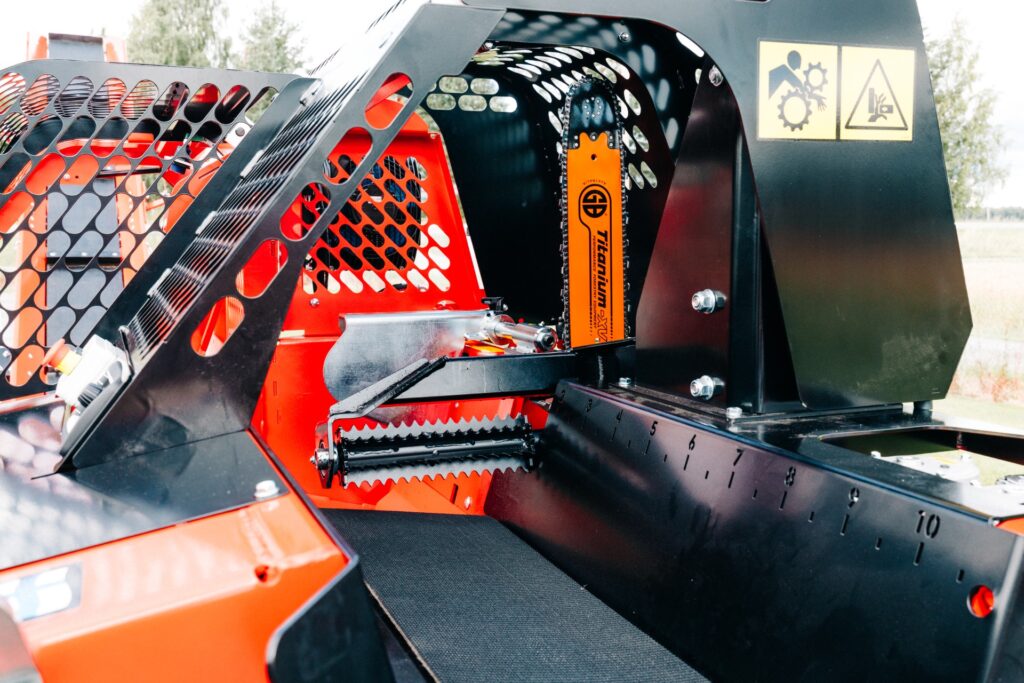
On Japa 505 models equipped with Japa Perfect Cut, hydraulic automatic chain tensioning keeps the chain at the correct tension during cutting. This reduces the need for manual adjustment and helps protect both the saw chain and guide bar.
Lubrication reduces friction between the rapidly moving saw chain and the guide bar. Insufficient lubrication increases heat and wear and can cause the chain to stretch more quickly. Over time, poor lubrication can damage both the chain and guide bar.
Check regularly that:
Perfect Cut also uses an electric chain lubrication pump that supplies oil throughout the cutting process. Continuous lubrication is particularly useful during demanding cuts through large or hard logs, where maintaining a good oil supply helps protect the cutting system.
Even a correctly tensioned and well-lubricated chain can wear quickly when cutting dirty wood. Sand and soil on the bark are highly abrasive and can dull the cutting teeth very quickly. Stones and other foreign objects can cause even more immediate damage.
Whenever possible:
Clean raw material is one of the simplest ways to extend saw chain life.
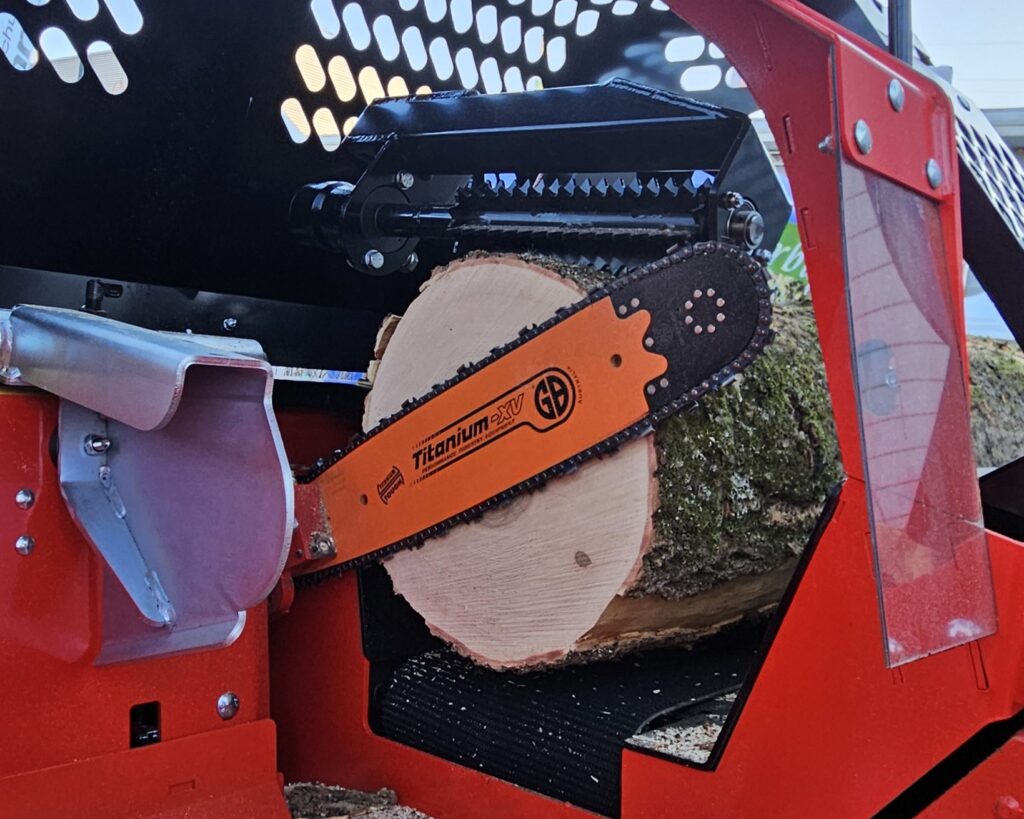
The guide bar wears together with the saw chain, so fitting a new or freshly sharpened chain to a poorly maintained bar will not solve the underlying problem. Clean the guide bar groove and oil passages regularly and inspect the bar for:
The guide bar should also be turned periodically. Using both sides helps distribute wear more evenly and extends its usable life. If chains repeatedly wear unevenly or cutting performance remains poor after fitting a sharp chain, inspect the guide bar and drive sprocket as well.
The saw chain, guide bar and sprocket work together as one cutting system. Allowing one component to become heavily worn can accelerate wear on the others. For example, a badly worn guide bar can cause uneven wear on a new chain, while a worn sprocket can prevent the chain from running smoothly.
Regular inspection is therefore cheaper than repeatedly replacing individual parts after problems appear. With Perfect Cut, normal chain replacement is also designed to be quick: the saw chain can be changed without tools, helping reduce downtime when a fresh chain is needed.
The most effective way to extend cutting-system life is to make a few checks part of normal firewood production:
Keep the chain sharp. Keep it correctly tensioned. Make sure lubrication is working. Keep the logs clean. Clean and turn the guide bar regularly. Inspect the sprocket and other components for wear.
Modern features such as the automatic hydraulic chain tensioning and electric lubrication included in Japa Perfect Cut can take care of two important variables automatically, but regular inspection and sharp cutting equipment are still essential.
When the entire cutting system is kept in good condition, the result is not only longer chain and guide bar life, but also faster cutting, fewer interruptions and more efficient firewood production.
No WhatsApp Number Found!
WhatsApp us